Rainforests, Reefs, and Reels: Which Online Casinos Are Actually Funding Conservation—and How to Tell
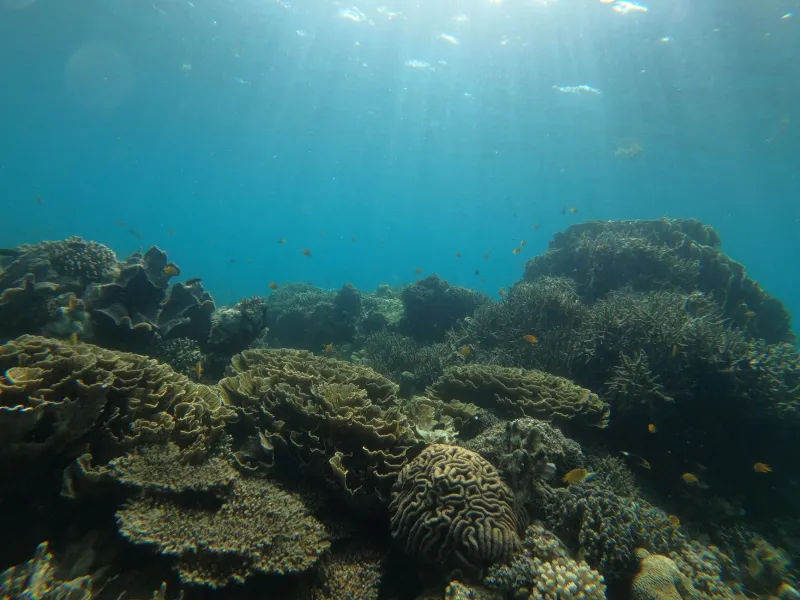
Somewhere between the flashing jackpot animations and the live dealer baccarat tables, a quiet revolution has been building in the online gaming industry. A growing number of operators have started funneling portions of their revenue into environmental conservation—and not just the vague 'we plant a tree per deposit' variety.
We're talking about structured partnerships with accredited conservation organizations, multi-year funding commitments, and in some cases, player-facing transparency tools that let you track where your gaming dollars actually end up.
But here's the thing: for every operator doing this meaningfully, there are three more slapping a turtle logo on their footer and calling it conservation. So let's break down who's doing what—and how you can tell the difference.
Why Conservation? Why Now?
The timing isn't random. ESG investing has gone mainstream, and the gaming industry—long viewed as a social liability rather than a social contributor—has been under increasing pressure to demonstrate positive impact beyond tax revenue and employment.
European regulators, in particular, have started nudging operators toward broader social and environmental accountability. Meanwhile, younger players (millennials and Gen Z especially) have shown in survey after survey that they factor corporate values into their consumer choices, including where they gamble online.
Conservation partnerships offer something that carbon offsets don't: a story. A tangible, visual, emotionally resonant story about sea turtles or old-growth forests that connects a player's entertainment spend to something that feels genuinely meaningful.
The risk, of course, is that 'story' can be manufactured just as easily as it can be real.
The Programs Worth Paying Attention To
Marine Sanctuary Funding
Several European-licensed operators have established formal donation structures tied to marine conservation. The more credible programs work directly with organizations like the Marine Conservation Society or regional equivalents, and publish annual impact reports showing specific funded projects—coral restoration sites, plastic removal initiatives, protected zone monitoring.
What separates these from greenwashing: the partner organization is independently verifiable, the funding amounts are disclosed (not just 'a percentage of profits'), and the operator doesn't control the narrative of how funds are spent.
Rainforest Protection Partnerships
A few operators have partnered with accredited REDD+ programs—the UN-backed framework for reducing emissions from deforestation. These aren't just donations; they're structured carbon avoidance projects where funds directly prevent forest clearing in places like the Amazon basin or Indonesian archipelago.
The verification here is actually more robust than most other conservation models, because REDD+ projects require third-party auditing to maintain certification. When an operator says they're funding a REDD+ project, there's a paper trail you can follow.
Biodiversity Offset Programs
This is newer territory. Some forward-thinking operators have begun funding biodiversity credits—essentially the conservation equivalent of carbon credits, but focused on habitat preservation and species protection rather than greenhouse gas accounting.
It's an emerging market, which means standards are still being developed. Treat claims in this space with healthy skepticism unless the operator can name the specific certifying body and project location.
Player-Directed Giving
Perhaps the most interesting model: a handful of platforms let players allocate a small percentage of their losses or deposits to a conservation cause of their choosing from a curated list. It's opt-in, transparent, and gives players direct agency.
This model is rare, but it's genuinely compelling—and worth seeking out if environmental giving matters to you.
The Red Flags: Conservation Theater
Not every green claim deserves applause. Here's what to watch for when an operator's conservation credentials feel more like marketing than mission:
Vague language without specifics. 'We support environmental causes' tells you nothing. Which causes? How much? Verified by whom?
No named partner organizations. Legitimate conservation partnerships involve named, independently verifiable organizations. If the casino is the only entity making claims about the program, that's a problem.
One-time donations presented as ongoing commitments. A $10,000 donation to a wildlife fund is nice. It is not a conservation program.
No public reporting. Real programs publish impact data. If you can't find annual reports or project updates, the program likely doesn't have much to report.
Conservation claims on platforms with no other sustainability measures. If a casino claims to fund coral reef restoration while running entirely on coal-powered servers with no responsible gambling tools, the conservation angle looks more like distraction than commitment.
How to Research a Casino's Conservation Claims
If you want to dig into whether a platform's environmental partnerships are genuine, here's a practical approach:
-
Google the partner organization independently. Does it exist? Does it list the casino as a partner on its own website? Does the organization have credible third-party accreditation?
-
Look for the money. Charities registered in the UK, EU, and US are required to publish financial disclosures. If a casino claims to donate to a registered charity, you can often verify the donation amounts in that charity's annual accounts.
-
Check for impact metrics. Hectares of forest protected, tons of plastic removed, coral colonies restored—these are the numbers that indicate a program is actually doing something. Marketing language about 'commitment' and 'passion' is not a substitute.
-
Ask directly. A casino that's genuinely proud of its conservation work should be able to answer detailed questions about it through customer support. Vague or evasive responses are telling.
What Verde Casino PL Believes
At Verde Casino PL, the 'verde' isn't decorative. We think the gaming industry has a real opportunity to redirect a portion of its substantial revenue toward environmental good—not as a PR exercise, but as a structural part of how responsible operators should function.
That means being honest about what conservation funding can and can't accomplish. A casino's donation to a rainforest protection program doesn't offset the environmental footprint of its data centers—those are separate issues requiring separate solutions. But done transparently and in genuine partnership with credible organizations, conservation funding can represent a meaningful positive contribution.
The players who care about this stuff are asking the right questions. The casinos worth playing on should be able to answer them.